

The engine oil in your car is far more than just a lubricant. It’s a vital fluid that performs multiple critical roles. These roles keep things running smoothly under the bonnet.
Its primary role is, of course, reducing friction between moving parts like pistons, crankshafts, and camshafts. Without adequate lubrication, these metal components would rapidly wear against each other, leading to catastrophic engine failure.
However, modern engine oils do much more. They contain detergents that help clean away carbon deposits and sludge that build up during combustion. They act as a coolant, carrying heat away from intensely hot areas like the piston skirts. They also form a protective layer against corrosion.
Think of it as the engine’s circulatory system, constantly working to maintain health and performance.
Understanding Oil Degradation and Checks
Over time and mileage, engine oil degrades. It becomes contaminated with combustion by-products, microscopic metal particles, and dirt. The heat cycles within the engine cause the oil’s viscosity to break down. This reduces its thickness and ability to flow.
As a result, its lubricating properties are diminished. This is why regular changes are essential. Neglecting them leads to increased engine wear, higher operating temperatures, reduced fuel efficiency, and potentially irreversible damage. Turbocharged engines are particularly sensitive to oil quality and condition, as the oil lubricates and cools the high-speed turbocharger bearings.
Between services, it’s wise to check your oil level regularly using the dipstick (usually a brightly coloured loop handle). Consult your owner’s manual for the correct procedure. Typically, you check it when the engine is warm. It should have been switched off for a few minutes. Make sure the car is on level ground.
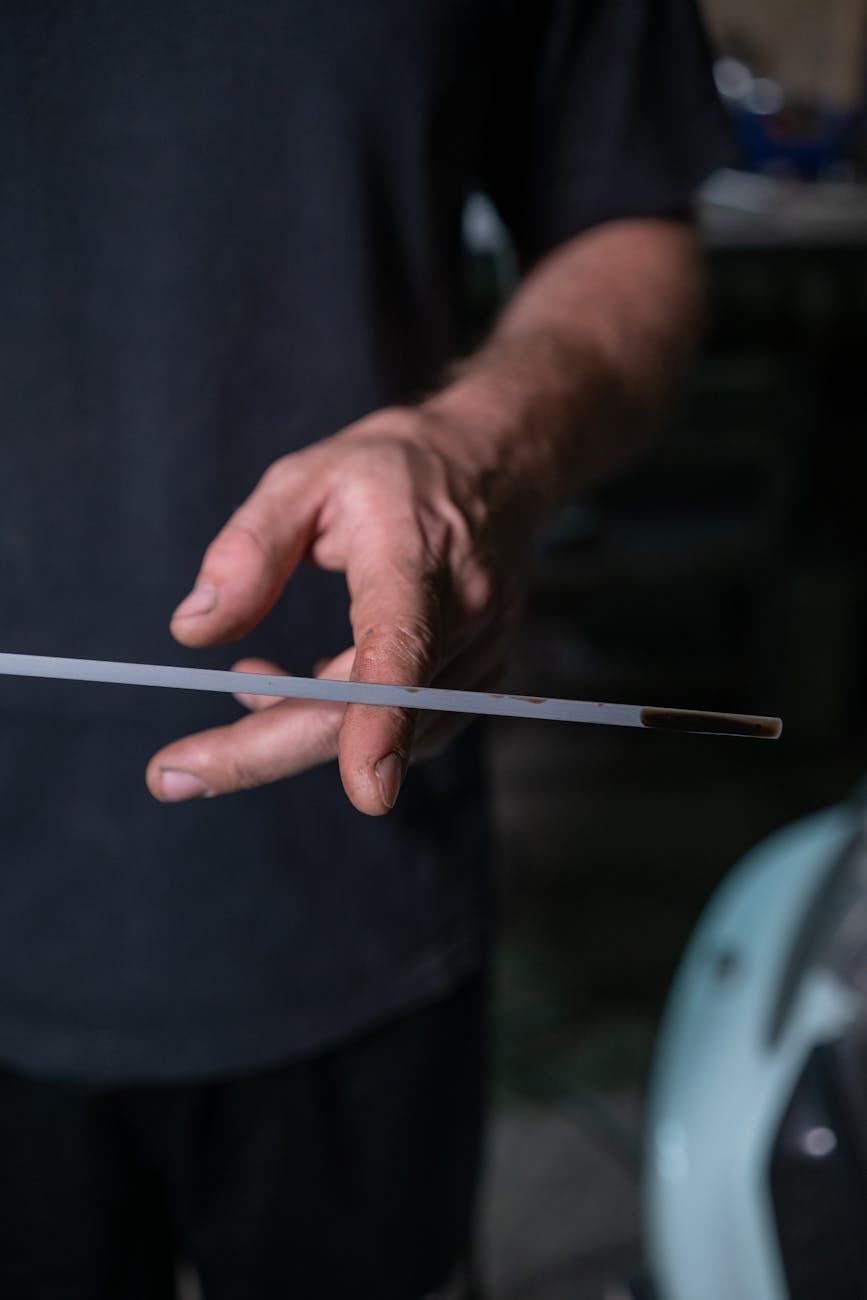
Wipe the dipstick clean. Reinsert it fully. Then withdraw it again to check the level against the minimum and maximum marks.
If it’s low, top it up with the correct grade of oil specified in your handbook (e.g., 5W-30, 10W-40 – these numbers relate to the oil’s viscosity at different temperatures). Using the wrong grade can harm your engine. While the MOT test checks the oil level isn’t obviously too low, it doesn’t assess the oil’s quality or age.
Service Intervals and Oil Types
Your vehicle manufacturer dictates the recommended service intervals, which include an oil and filter change. These intervals are based on mileage or time (e.g., every 12,000 miles or 12 months, whichever comes first). Sticking to this schedule is crucial, especially for cars under warranty. Modern engines often use synthetic or semi-synthetic oils. These oils offer better performance and longevity than older conventional mineral oils. However, changing them on schedule is still vital. The oil filter, which traps contaminants, should always be replaced along with the oil.
Ultimately, a regular oil change is inexpensive preventative maintenance. Compared to the potential cost of major engine repairs caused by neglect, it’s a small price to pay for reliability, performance,
Of course, if you want peace of mind, bring your car into us, on Featherbed Lane in Shrewsbury. We’ll be happy to help.
 Halfway House Garage